AI and CX: Don’t Automate the Relationship
AI and Customer Experience: Don’t Automate the Relationship
AI and customer experience belong in the same leadership conversation. The question is where technology can make service better—and which moments still need a person.
In episode 274 of the Customer Service Revolution podcast, John DiJulius welcomes Jess Pischel, founder of Cleveland-based Human First AI Consulting. A former senior customer experience consultant and dean of The DiJulius Group’s Customer Experience Executive Academy, Jess brings a service perspective to the decisions leaders face about AI.
John and Jess explore how businesses can reduce repetitive work, involve employees in implementation, and protect the human interactions that build trust. Their examples range from summarizing customer journey workshop notes to a chatbot handoff that leaves a customer explaining the same problem again.
Where AI Can Support a Better Customer Experience
Remove the Busywork That Gets Between Employees and Customers 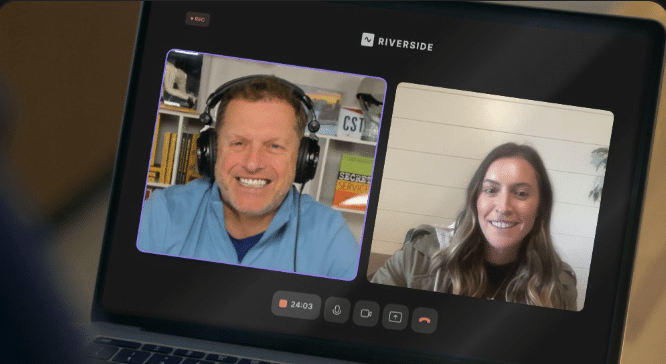
Jess describes employees who want to deliver excellent service but spend their energy on data entry, paperwork, and repetitive emails. She sees an opportunity to use AI to relieve that burden so people have more capacity for relationships and meaningful work.
John shares a practical example from customer journey mapping: photographing workshop sheets and using AI to help turn handwritten ideas into usable notes. They also discuss summarizing information, reviewing presentations, and challenging an onboarding experience from a new employee’s perspective.
Fix the Workflow Before You Automate It
Jess warns against expecting a new tool to repair a messy process. Leaders first need to understand the workflow, clarify what should improve, and decide where automation fits. Making a broken process faster can leave the underlying problem in place.
Where Customers Still Need a Human
Preserve Context When Technology Hands Off to an Employee
John describes a frustrating exchange in which a chatbot transferred him to a representative who began by asking how they could help. He had already explained the issue. The discussion connects this experience to a familiar service standard: a warm transfer should carry the customer’s context forward.
Protect Moments That Require Empathy and Judgment
John and Jess discuss grieving families, difficult employee conversations, personal recognition, and service recovery. Their recommendation is to retain human responsibility for moments that require empathy, accountability, or judgment. AI may help someone prepare, but the relationship still needs attention from a person.
How to Build Employee Buy-In for AI
Jess recommends starting with a narrow use case, involving employees, and talking openly about what works and what fails. Leaders can ask which tasks employees find most draining and what they would do with the time recovered.
That conversation turns an abstract technology rollout into a practical discussion about the employee experience. John and Jess consider how saved time could support stronger customer relationships and more meaningful work.
Three Questions to Ask Before Choosing an AI Use Case
Jess offers a simple starting filter:
- Does the task happen often?
- Does it follow a pattern?
- If AI gets it wrong, will someone catch the error before it matters?
Answering yes to all three may make a task worth exploring. The discussion also emphasizes keeping a human involved in reviewing output and challenging unsupported information.
Listen to Episode 274
Hear John DiJulius and Jess Pischel discuss AI and customer experience, employee buy-in, and the service moments that should stay personal.
Listen to the Customer Service Revolution podcast wherever you listen, or visit:
https://thedijuliusgroup.com/the-customer-service-revolution-podcast/
Frequently Asked Questions
How Can AI Improve Customer Experience Without Losing the Human Touch?
In this episode, John and Jess recommend using AI to support repetitive work, organize information, and prepare employees for customer conversations. They emphasize keeping people responsible for interactions that require empathy, judgment, and accountability.
Where Should a Business Start With AI?
Jess recommends starting with one specific business problem and a small, repeatable task. Understand the workflow, check the tools already available, and build confidence before expanding the effort.
What Should Businesses Avoid Automating?
John and Jess recommend preserving human involvement in sensitive conversations, service recovery, employee discipline, and meaningful recognition. Their discussion focuses on the relationship consequences of handing these moments to an automated response.
How Can Leaders Reduce Employee Resistance to AI?
Invite employees to identify frustrating tasks and help decide how saved time will be used. Jess also recommends sharing both successes and failures so learning becomes part of the implementation process.
Who Is Jess Pischel?

Jess Pischel is the founder of Human First AI Consulting in Cleveland. Before founding the business, she spent more than five years with The DiJulius Group as a senior customer experience consultant and served as dean of its Customer Experience Executive Academy.
Key takeaways chapters and quotes
Key takeaways
- Begin with the business problem and the customer or employee experience you want to improve.
- Clarify a workflow before deciding which parts to automate.
- Explore AI for repetitive work such as summarizing workshop notes and organizing information.
- Carry customer context forward when a chatbot transfers someone to an employee.
- Involve employees in deciding which tasks to change and how to use recovered time.
- Review AI output and challenge statistics or information that lacks a source.
- Keep human responsibility for empathy, judgment, recognition, and service recovery.
- Start with a small use case and build confidence before expanding.
Chapters
These anchors follow the supplied transcript. Its first spoken entry is at 00:59. Check against the final audio and video after intro changes, edits, or ad insertion; do not apply an assumed 59-second shift.
00:00 Human-first AI with Jess Pischel
03:33 From customer experience consulting to AI
05:39 Fix the workflow before automating it
07:15 Practical uses for workshop notes and onboarding
10:00 Connecting information across disconnected systems
12:15 When automation threatens the customer relationship
16:00 Chatbot handoffs and making customers repeat themselves
17:39 Introducing AI without overwhelming employees
19:54 Discussing failures and checking AI-generated information
22:02 Employee buy-in and reinvesting saved time
23:57 What human-first AI means
24:36 Three questions for selecting an AI use case
26:34 Human judgment, recognition, and service recovery
28:47 Entrepreneurship and the first year in business
35:27 Where leaders can start this week
37:14 Human First AI Consulting and the Collective
38:13 AI learning and Ohio TechCred resources
40:46 Upcoming webinars and marketing in the age of AI
42:25 Closing reflections
Pull quotes
-
- “But you don’t want to automate a messy system because that’s just going to make it even more messy.” — Jess Pischel, 05:56
- “It means that every decision starts with the person and not a tool.” — Jess Pischel, 24:08
- “Does it happen often? Does it follow a pattern?” — Jess Pischel, 24:51
- “So yeah, anything that needs empathy, accountability, judgment, I’d say keep to a human.” — Jess Pischel, 28:31
Connect with Jess and explore the resources discussed:
Human First AI Consulting: https://www.humanfirstaiconsulting.com/
AI Readiness Assessment: https://www.humanfirstaiconsulting.com/ai-readiness/
Human First AI Collective: https://hfaicollective.com/
AI training and TechCred information: https://www.humanfirstaiconsulting.com/techcred-reimbursement/
Business Education: https://www.score.org/oh/northeast-ohio/business-education/marketing-in-the-age-of-ai-10-29-2026/
Listen and explore more episodes:
Find the Customer Service Revolution podcast wherever you listen.
https://thedijuliusgroup.com/the-customer-service-revolution-podcast/
Know a leader deciding where AI belongs in the customer experience? Share this episode with them.
“The little wins matter when it comes to AI.” — Jess Pischel, 35:3
Links:
Employee Experience Revolution Book: https://thedijuliusgroup.com/product/the-employee-experience-revolution-pre-sale/
Experience Revolution Membership: https://thedijuliusgroup.com/membership/
The DiJulius Group Methdology: https://thedijuliusgroup.com/x-commandment-methodology/
Company Service Aptitude Test: https://thedijuliusgroup.com/c-sat-forms/individual-c-sat/
Schedule a Complimentary Call with one of our advisors: tdg.click/claudia
Ask John! Submit your questions for John, to be aired on future episode: tdg.click/ask
Customer Experience Executive Academy: https://thedijuliusgroup.com/project/cx-executive-academy/
Books: https://thedijuliusgroup.com/shop/
Contacts: [email protected] , [email protected]
If you want to learn how world-class organizations build cultures customers cannot live without, explore The Experience Revolution Membership.
Inside the membership you’ll gain access to livestream workshops, practical frameworks, and proven strategies used by organizations around the world.
Learn more at
https://thedijuliusgroup.com/membership/
Learn More
If your organization is working to improve customer experience but struggling to connect it to measurable business outcomes, The DiJulius Group can help.
Visit: https://thedijuliusgroup.com
Listen to more episodes:
https://thedijuliusgroup.com/the-customer-service-revolution-podcast/
Subscribe
We talk about topics like this each week; be sure to subscribe wherever you listen to podcasts so you don’t miss an episode.