The Relationship-Disadvantaged Epidemic
There is a Relationship-Disadvantaged Epidemic; Here’s What Your Business Can Do About It
The majority of young men have never asked a woman out on a date in person
My favorite podcaster, Scott Galloway recently said, “More than half of 18-24 males have never asked a woman out in person. Think about how tragic that is, that these young men are not developing the social skills…the ability to open and establish contact and connection with someone.” This is frightening. You can check out the entire interview (around 4 minute mark, he starts talking about young men).
Gen Z has Telephobia
Do you remember when the primary method of communication was calling someone? Can you remember that long ago? Things have changed a little bit. Today, tech-savvy Gen Z is consumed with anxiety by picking up the phone. “Telephobia is a fear or anxiety around making and receiving telephone calls,” according to Liz Baxter, a careers advisor at Nottingham College in the UK.
To help, there are now telephobia courses to teach lost art of a call. “They’ve [Gen Z] just simply not had the opportunity for making and receiving telephone calls. It is not the main function of their phones these days, they can do anything on the phone, but we automatically default to texting, voice notes, and anything except actually using a telephone for its original intended purpose, and so people have lost that skill,” she explained in a CNBC interview.
The Relationship Disadvantaged Epidemic
As a society, we are now relationship disadvantaged. We no longer become curious about others or eager to engage in conversations. We spend less time with friends via in-person interactions. The younger generation primarily communicates electronically, and the explosion of e-commerce means we go out less and less. When we do, we now have the option of self-service checkout to avoid interacting with other human beings. A simple interaction can have profound effects on someone’s emotional well-being.
Today, people are longing for a sense of community, belonging, and purpose, a world in which people actually know our names, what we do, what is important to us, and trust in one another. Today, trust is an endangered value. Personally and professionally, success is increasingly about creating and building human connections.
In the past, soft skills had a reputation for being nice to have in business, however, studies have shown that strong soft skills boost employee productivity and retention by 12% and deliver a 250% return on investment. Another study reported that emotional intelligence skills make up nearly 90% of the attributes that set high-performing leaders apart.
The need for Service Aptitude Training
Service Aptitude skills do not apply to the technical or operational side of the experience. However, they are among the most critical parts of an organization’s customer experience. The quality of your customer service and your organization’s customer service level comes down to one thing and one thing only. The average service aptitude of every employee you have.
Service Aptitude: A person’s ability to recognize opportunities to meet and exceed customers’ expectations, regardless of the circumstances.
Service aptitude represents the hospitality side only. This means how an employee makes another person feel. To be a company that consistently delivers outstanding customer service by all, these characteristics need to be screened for in the interview process, a mandatory part of your new employee training, and constantly revisited with your existing employees.
While these skills seem like basic expectations of individuals in the workforce, one study showed that nearly 60% of leaders in the U.S. believe it’s difficult to find candidates with soft skills. That is why it is the burden of companies and the training they provide to develop these constantly.
Which service aptitude skills are most important for customer-facing employees to deliver an expectational customer experience?
- Genuinely likes others – a person who truly enjoys the company of others and takes a sincere interest in their well-being and happiness. They have a willingness to engage with people.
- Happy/Positive/Optimistic – a person who maintains a cheerful and hopeful outlook. They tend to see the good in situations, expect positive outcomes, and radiate joy and contentment. They are constantly smiling.
- Friendly, Kind & Caring – A friendly person is approachable and easy to talk to. They go out of their way to be considerate, generous, and helpful to others.
- Charismatic – they are a people magnet. They give off a positive energy that people want to be around.
- Empathetic – the ability to put themselves in someone else’s shoes and respond with compassion and understanding.
- Good Listener – someone who actively engages in hearing what others are saying, understands their messages and responds thoughtfully. This involves paying full attention, not interrupting, and showing empathy and understanding.
- Insatiable curiosity – a relentless desire to learn and understand more about their situation. People with insatiable curiosity always seek new knowledge, ask questions, and explore various topics enthusiastically. They do not assume anything and are open to learning.
- Strong at making a connection, building a rapport/relationships – the ability to establish meaningful and positive interactions with others quickly. Building rapport involves finding common ground, showing genuine interest, and creating a sense of trust and mutual respect.
- Trusting/charitable assumption – people who give others the benefit of the doubt and assume the best intentions in their actions and words.
Which of the nine service aptitude skills can improve with training, and which cannot be?
Not all nine service aptitude skills can be trained on. The list is in the order of what you need to screen for in your interview process and what can be improved through training. The first four are the service aptitude skills that cannot be trained:
- Genuinely likes others – a person who truly enjoys the company of others and takes a sincere interest in their well-being and happiness. They have a willingness to engage with people.
- Happy/Positive/Optimistic – a person who maintains a cheerful and hopeful outlook. They tend to see the good in situations, expect positive outcomes, and radiate joy and contentment. They are constantly smiling.
- Friendly, Kind & Caring – A friendly person is approachable and easy to talk to. They go out of their way to be considerate, generous, and helpful to others.
- Charismatic – they are a people magnet. They give off a positive energy that people want to be around.
Hire for the Heart, Train for the Part
All the training in the world will not make a person who doesn’t enjoy others change. The same goes for if you find people who are negative and are generally unhappy. Your goal is to find candidates who have exceptional service aptitude and are happy, kind, caring, friendly, positive, optimistic, grateful, and genuinely like others.
This guide is the best resource on Interview Question Guide to Gauge Service Aptitude.
This guide focuses on whether the candidates have the potential to provide excellent customer experience skills, primarily soft skills. These questions should be combined with other interview questions not listed in our Guide that assess skills like technical knowledge, work ethic, cultural fit, etc. We also do not recommend using all these questions; pick the ones that best fit your company’s customer service culture.
*Related – Conducting Interviews Like Detective Columbo
How do we train our employees on the top service aptitude skills?
The following service aptitude skills need to be a mandatory part of your new employee onboarding training and constant retraining of your existing employees and excellent resources on each:
Empathetic – the ability to put themselves in someone else’s shoes and respond with compassion and understanding.
Resources:
Good Listener – someone who actively hears what others are saying, understands their messages, and responds thoughtfully. This involves paying full attention, not interrupting, and showing empathy and understanding.
Resources:
- The Relationship Economy book
- Talking Less, Listening More: Can You Keep Quiet For Longer Than 18 Seconds?
Insatiable curiosity – a relentless desire to learn and understand more about their situation. People with insatiable curiosity always seek new knowledge, ask questions, and explore various topics enthusiastically. They do not assume anything and are open to learning.
Resources:
Strong at making a connection, building a rapport/relationships – the ability to establish meaningful and positive interactions with others quickly. Building rapport involves finding common ground, showing genuine interest, and creating a sense of trust and mutual respect.
Resources:
- Meet as Strangers Leave as Friends Ted Talk
- How to Train Your Employees to be Great at Relationship Building
- The Relationship Economy (Part 2): 5 Keys to Relationship Building
- How Relationships are the Most Important Factor in your Personal and Professional Success
Trusting/charitable assumption – people who give others the benefit of the doubt and assume the best intentions in their actions and words.
Resources:
- Be a Zero Risk Company with a Great Customer Loyalty Strategy: Screw Up First
- How to be a Zero Risk Company
- When faced with an upset customer, your employees should do the LEAST
Now Enrolling!
Become a Certified Experience Executive in 2025

Transforming Leaders – Transforming Experiences – Transforming Cultures
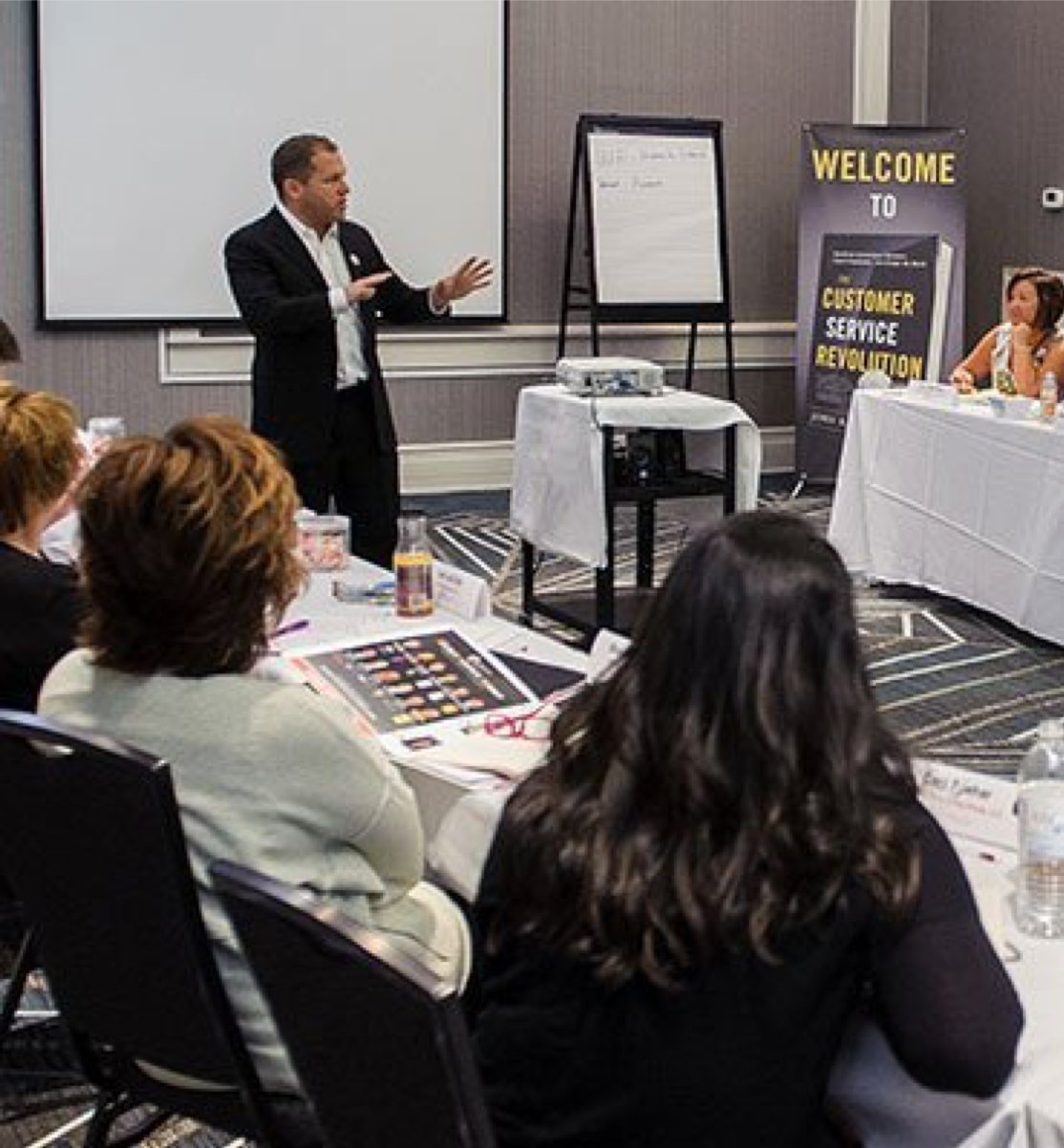
Our Experience Academy courses have been designed to certify people for a new level of leadership, benefiting their career and your organization.
- The Customer Experience Executive Academy enables you to assess an organization’s current state of service and work to build systems to consistently deliver world-class experiences.
- The Employee Experience Executive Academy enables you to assess your current culture and build systems to hire, onboard, train and retain the best employees.
Learn more about the CXEAcademy. Spring Session begins in April
Learn more about the EXEAcademy. Summer Session begins in June
Schedule a call to discuss registration
Become a More Confident Speaker, in Just 2 Days!
Join our June 10, 11 workshop in Cleveland, OH, led by John DiJulius and Dave Murray.
During this two-day workshop, you’ll learn to:
- Present with clarity and confidence
- Deliver messages that inspire action
- Connect with your audience every time

Register now and Become a Zero-Risk Organization!
June 9, 2025 | 12:00 PM – 2:00 PM ET
- Identify and eliminate friction points in your customer journey
- Create a proactive service strategy that makes doing business with you effortless
- Learn how to prevent and recover from service failures in a way that builds customer loyalty
- Leave with a Zero Risk Action Plan to ensure every customer interaction is seamless and risk-free
The 2025 Livestream Workshop Series:
June 9: Become a Zero-Risk Organization
September 8: Create a Recruiting Experience
December 1: Create an Onboarding Experience
Create Non-negotiable Standards (This workshop has passed, but replay is available with full series purchase)
Are you ready to revolutionize how your organization delivers customer and employee experiences?
Join John DiJulius and Dave Murray of The DiJulius Group for the Experience Revolution Livestream Workshop Series.
This four-part series dives into essential strategies for creating a zero-risk organization, improving recruiting and onboarding experiences, and establishing non-negotiable service standards.
Reserve your spot today:
- Attend any workshop for $249 each
- Unlock the entire series, 4 workshops (plus 2 bonus replays!) for $749 *BEST VALUE*
Register Now and Save Your Spot
Looking for a Keynote Speaker?
Bring John in to your team or event!
Take advantage of special savings when John is in your area. See schedule below, or contact Claudia for details or to be alerted when John is in your area.