How to Deliver Effective One-on-One Meetings
How to Deliver Effective One-on-One Meetings with Your Employees 
*The following article on delivering effective one on one meetings is an excerpt from our new book, The Employee Experience Revolution: Increase Morale, Retain Your Workforce, and Drive Business Growth
Why One-On-One Meetings Can’t Be Optional
Typically, when we consult with an organization, two things happen in one-on-one meetings.
- They are not happening at all.
- They are not happening well.
Meetings Not Happening at All
Organizations need their leaders to understand that one-on-one meetings are a priority and a necessity. If not, these meetings on the calendar easily get bumped as “more important” items pop up. Since one-on-one meetings are not “revenue-generating” or “client-facing,” they are often seen as a less important use of time or, worse, even optional. Nothing could be further from the truth.
Here is some data to back up the point that managers do not prioritize one-on-one meetings: A study conducted by the organization Hypercontext states that while 94 percent of managers claim to schedule one-on-one meetings with their teams, employees report that less than half of those meetings actually take place—or roughly 45 to 50 percent get canceled.
*Related – Employee eXperience Executive Academy Launches this September
Call Center Tenure Tied to Meetings
Many leaders in the call center industry have learned the importance of effective one-on-one meetings for employee engagement and tenure. Length of tenure can be particularly important in a call center environment. To ensure that one-on-ones do not fall by the wayside, many organizations have made holding these meetings mandatory and gone the extra step by making sure each manager has enough time in their day to conduct them—often reassigning other tasks that might get in the way.
Meetings Not Happening Well
A good one-on-one meeting can boost employee engagement, morale, and productivity. A poorly done one-on-one can do just the opposite. Because of this, we need to ensure that our leaders understand the importance of this meeting and have the training to conduct an effective one-on-one meeting. A mistake so many organizations make is that they want to begin this initiative and ask their leaders to conduct these meetings. Still, they never provide training on how to conduct an effective one-on-one. That is why so many organizations have unproductive and harmful one-on-one meetings.
*Related – Be One of The Best decisions Your Employees Ever Made
90 Percent Listening, 10 Percent Talking
So, let’s start by defining some important elements of an effective one-on-one meeting. According to Qualtrics, listening and clarification are the two most important actions in one-on-one meetings. Qualtrics states that the manager should do 90 percent of the listening and only 10 percent of the talking, ensuring that all aspects of the job are clear. Think of the one-on-one meetings taking place in your organization right now. Are the managers following the 90 percent listening/10 percent talking rule? One thing needs to be clear on holding one-on-ones—it is the employee’s meeting. It is not the time for the manager to share all their issues and frustrations. Managers must remember that the primary goal and benefit of effective one-on-one meetings is to build trust with employees while improving engagement, productivity, and performance. A Harvard Business Review study showed that employees who receive little to no one-on-one time with their managers are less engaged with their work and the organization.
Tips and Tricks to Deliver Effective One-on-Ones in Your Organization
- Let the team member set the agenda—and make it collaborative. Topics typically include current goals, career aspirations, and positive recognition, all of which can be ongoing topics.
- Keep it informal—one-on-ones do not always have to take place across a desk. Go for a walk or head to the coffee shop.
- Think of it less as a meeting and more as an ongoing discussion—track items discussed for progress and resolution.
- Make it a regular occurrence- Schedule one-on-one meetings in advance and stick to the schedule. Do not cancel this meeting unless there are no other alternatives. Canceling sends a message that this meeting is not important.
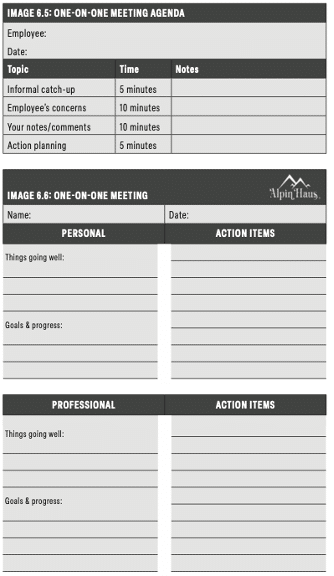
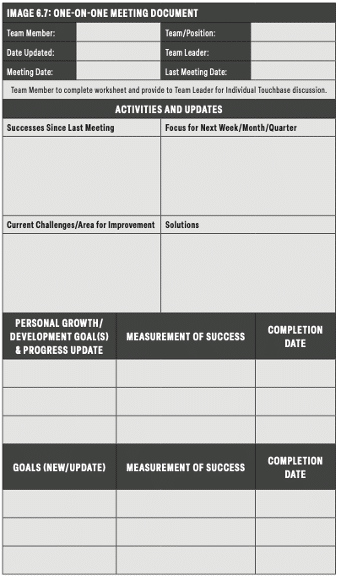
- Create a consistency template-and train managers to use it. It is very important to ensure that one-on-ones happen consistently and are conducted consistently well. A simple template can ensure your managers are following a path to success.
The following image is an example of a one-on-one template our client Alpin Haus, one of America’s largest RV dealers, uses:
_________________________________________________________________
Get a Case of The Employee Experience Revolution Books for 50% Off!
Many of our clients have contacted us about ordering for their leadership team. As a thank-you gift for helping us become a best-seller, we are offering 50% off of every case of books (30) you order. You can order here and use code EXR50 to get your 50% off.
Employee eXperience Executive Academy Launches this September

Starting this fall will be our first Employee eXperience Executive Academy (EXEA) Class. Guided by the renowned DiJulius Group, this comprehensive program empowers leaders, HR teams, and emerging managers to create a workplace where inspiration thrives, teams are fulfilled, and growth is inevitable. Through our years of experience, we have seen many companies miss opportunities for leadership development, resulting in “accidental” managers who struggle to lead effectively. Through no fault of their own, these leaders add to the complexity of attracting and retaining top talent, impacting business growth and success.
Episode 163 of The Customer Service Revolution Podcast: Creating a New Employee Onboarding Experience
Register Now for Upcoming *Free* Webinars
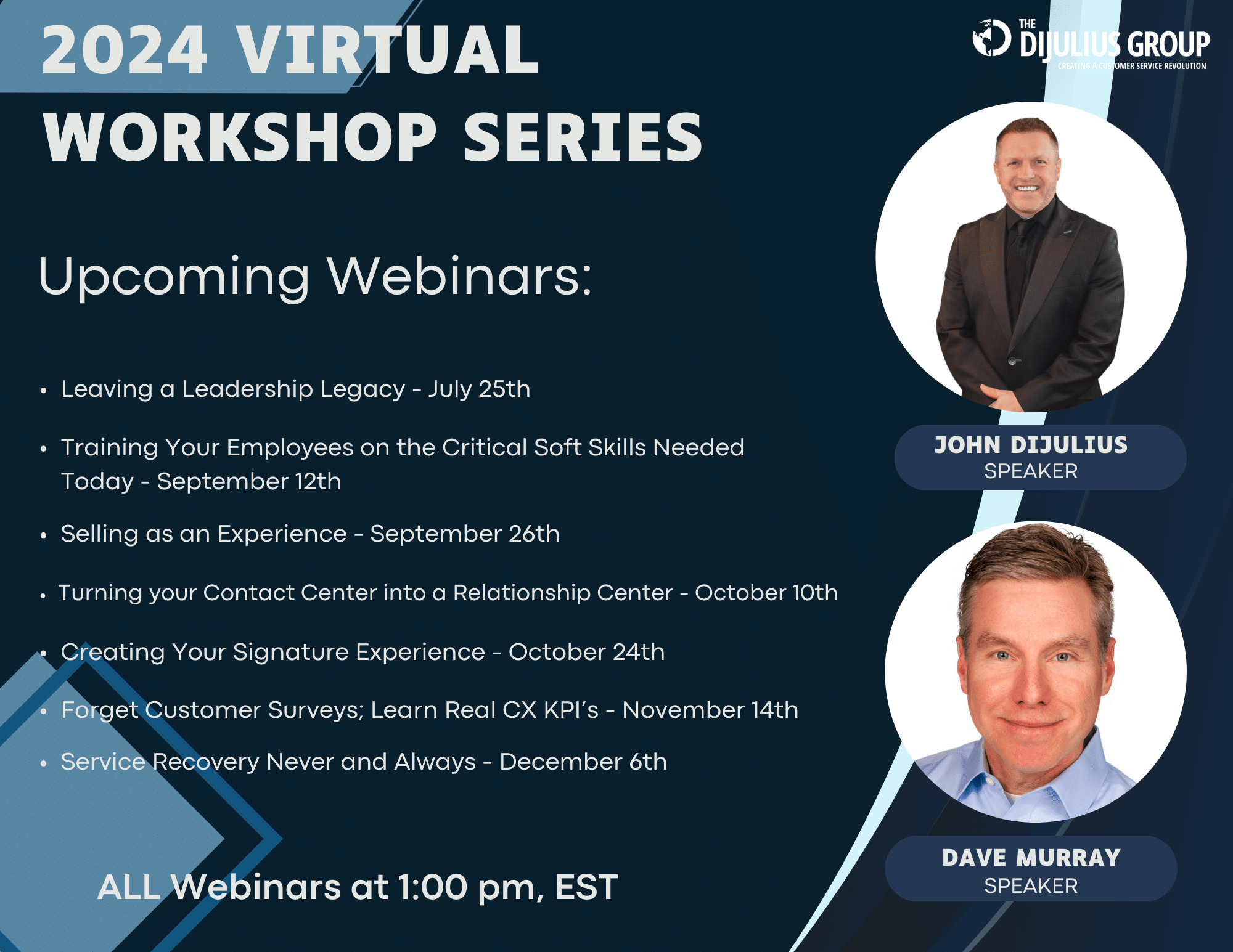
25 July: Leaving a Leadership Legacy
12 September: Training Your Employees on the Critical Soft Skills Needed Today
26 September: Selling as an Experience
10 October: Turning your Contact Center into a Relationship Center
24 October: Creating Your Signature Experience
14 November: Forget Customer Surveys; Learn Real CX KPI’s
6 December: Service Recover Never and Always