How Do I Align Employee Personal Development with Company Goals?
The Answer Hiding Behind the “Quiet Cracking” Crisis
What I’m Seeing in Organizations Right Now
I’ve been working with organizations across the country for decades, and what I’m seeing right now is something I’ve never quite encountered at this scale. It’s called “quiet cracking,” and it may already be happening inside your organization — even if you can’t see it yet.
Unlike the viral “quiet quitting” trend we talked about in 2022, quiet cracking is more dangerous because it’s invisible. It’s a persistent, slow-building sense of workplace unhappiness that causes employees to disengage, perform below their potential, and quietly plan their exit — not because they want to leave, but because they feel stuck, undervalued, and unseen.
According to a 2025 Gallup report covered by CNBC, employee disengagement cost the U.S. economy approximately $2 trillion in lost productivity last year. More than half of employees surveyed by TalentLMS reported experiencing some level of quiet cracking — and the most frightening part is that it can look indistinguishable from a normal, functioning employee, right up until they’re gone.
Here’s what really got my attention: the 2025 Gallagher Talent Benchmarks Report found that career growth opportunity has now surpassed trust in leadership as the top driver of employee engagement. Think about that. Your people don’t just want a paycheck. They want to see their personal development advancing the goals of your organization. They want to feel like you see them as a whole person, not just a resource.
So how do we close that gap? That’s exactly what I want to walk you through — using the framework we’ve built and refined at The DiJulius Group over the past 25+ years.
Let Me Be Direct: This Is a Leadership Problem
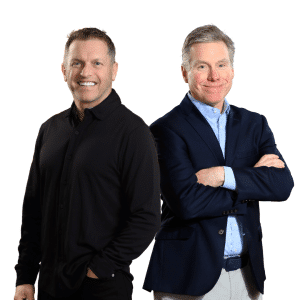
Before I get into the solution, I need to name the real root cause. In my book The Employee Experience Revolution, which I co-authored with my VP of Consulting David Murray, I say it plainly:
“The ‘Great Resignation,’ ‘Quiet Quitting,’ and ‘Cancel Culture’ are not indictments on employees, but rather, business leaders’ lack of focus on truly caring for the people who are under their command.” — John DiJulius, The Employee Experience Revolution
That reframe changes everything. If quiet cracking is a symptom, the disease is a failure to invest in employees as human beings — not just workers. The cure isn’t a ping-pong table or a wellness app. It’s a systemic approach to aligning where your people want to grow with where your company needs to go.
I dive deeper into this challenge in my Employee Experience Revolution on-demand webinar — I’d encourage you to watch it with your leadership team.
The Framework I Use: Alignment Through the Employee Experience Model (T.E.E.M.)
At The DiJulius Group, everything we do runs through our X-Commandment Methodology — the same system we’ve used to help organizations like Starbucks, Chick-fil-A, The Ritz-Carlton, and KeyBank build world-class cultures from the inside out. At its heart is Commandment II: World-Class Internal Culture, which includes the Employee Experience Model (T.E.E.M.)
T.E.E.M. guides leaders through every stage of an employee’s journey — from recruitment and onboarding through the first year and beyond — with intentional standards built into each stage. It’s not a one-size-fits-all checklist. It’s a living system that lets you meet your people where they are while moving them in the direction your company needs.
1. Make Personal Development Part of the Job, Not an Afterthought
Here’s one of the biggest mistakes I see: professional development is treated as something that happens away from work — a training day here, an online course there. The best companies I work with weave development into the daily experience of being employed there. As I’ve discussed on Episode 151 of my Customer Service Revolution podcast, when employees find meaning and growth in their everyday role — not just their annual review — everything changes.
Ask yourself: what skills or strengths does this employee want to build, and how can I channel those into work that also serves our customers and culture? That’s where alignment lives.
2. Define a Customer Experience Action Statement That Gives Your People Purpose
Every engagement I do with a client starts with building a Customer Experience Action Statement (CXAS) — a concise articulation of your brand’s purpose and how every team member contributes to it. This isn’t marketing copy. It’s your North Star. When your people understand why their work matters — not just what they’re supposed to do — their development becomes deeply personal. Their growth is your company’s growth.
“People want to be part of something larger than themselves. They want to be part of something they’re proud of, that they’ll fight for, and that they trust.” — John DiJulius
3. Build Never & Always Standards That Create Predictability and Safety
One of the most underrated contributors to quiet cracking is role ambiguity. When your people aren’t sure what’s expected of them — or when the standards change depending on who’s watching — anxiety and disengagement set in fast. In my work, we define Never & Always standards for every organization I work with: the non-negotiable behaviors that define how your team operates at every touchpoint, internal and external. These aren’t rigid scripts. They’re a framework that eliminates guesswork and gives your people the confidence to show up fully every single day.
4. Develop Leaders Who Ask the Right Questions
Quiet cracking often persists because the managers closest to employees aren’t having the right conversations. I tell a story in my consulting and training sessions about a guy named Nick — a great performer who got promoted on a Friday, went out with his coworkers that night, and on Monday morning was expected to hold those same coworkers accountable. We threw him in the deep end without teaching him to swim, then expected him to be an Olympic swimmer.
“We just set him up for failure… so many employees quit. I’m not blaming Nick. I’m blaming the company because we threw Nick in the deep end without teaching him how to swim and expected him to be an Olympic swimmer.” — John DiJulius
Train your managers to ask growth-oriented questions: “What do you want to be doing in two years? What’s getting in your way right now?” That’s how you close the development gap and make your company feel like an investment in the person — not just a place that extracts their labor.
Here’s What Happens When You Get This Right
This is the principle I’ve built my entire career around, and the data keeps proving it right:
“A good customer experience starts with a good employee experience. The CX will never be better than the EX.” — John DiJulius
I explore this at length in Why the Employee Experience Revolution. When your people feel seen, developed, and connected to a meaningful mission, here’s what becomes measurable:
- Lower voluntary turnover
- Higher Net Promoter Scores from customers
- Increased internal referrals and employer brand strength
- Greater willingness to go above and beyond in every customer interaction
The organizations I’ve worked with — Starbucks, Chick-fil-A, The Ritz-Carlton — don’t just have great customer service. They have it consistently, at scale, because they’ve built systems that develop and align their people from day one. That’s what our employee experience consulting is designed to do.
Three Things You Can Do Right Now
Step 1: Audit Your Employee Journey
Walk through what a new hire experiences from day one through day 90. Use the T.E.E.M. framework to map each stage. I guarantee you’ll find at least two or three places where connection to your company’s purpose gets completely lost.
Step 2: Build Clarity Before You Build Programs
Before you launch another training initiative, create your Customer Experience Action Statement first. Ask: how does this learning initiative connect to our CXAS? How does it advance this specific employee’s career goals? If you can’t answer both questions, you’re building programs in a vacuum.
Step 3: Invest in Your Middle
Front-line managers are the fulcrum of alignment. They’re also the most underdeveloped leaders in most organizations. Equip them with the language, tools, and expectations to have meaningful development conversations weekly — not once a year. Our Customer Experience Executive Academy is specifically designed to develop leaders at exactly this level.
The Bottom Line
Quiet cracking isn’t an employee problem. It’s a systems problem — and I’ve spent my career proving that systems can be redesigned. The organizations I work with build cultures where employees don’t just survive their workdays — they grow through them. Where company goals and personal aspirations aren’t competing forces, they’re complementary ones.
That’s not a fantasy. That’s a methodology. And it’s available to you.
Let’s Talk About What’s Possible for Your Organization
If you’re a CEO, HR leader, or CX executive ready to align your employee development strategy with your company’s goals, my team and I would love to help. We work with organizations of every size — from independent businesses to global brands — and we can build a strategy around your specific goals, budget, and culture.
→ Schedule a Complimentary Strategy Call — Talk directly with a DiJulius Group advisor
→ Get The Employee Experience Revolution — My latest book — the roadmap for becoming your employees’ best professional decision
→ Register for the CX Executive Academy — The most rigorous CX & EX leadership certification in the industry
→ Watch the Employee Experience Revolution Webinar (On-Demand) — Free resource — watch with your leadership team
→ Explore the X-Commandment Methodology — The full framework behind every world-class service culture I’ve helped build