Three Types of Sales Leads, Plus Much More…
Customer Experience + AI
“As AI gets more efficient and accessible, we will see its use skyrocket,turning it into a commodity.”
–Satya Nadella, CEO of Microsoft
Can an interaction with an AI be better than one with a human? Think about that. When I read this in a report titled “The Experience Gap: AI’s Imminent Impact on CX,” it got me thinking. AI is becoming increasingly sophisticated in incorporating empathy into its models. The human experience is rarer today than ever before; therefore, it has never been more critical. When a client interacts with one of your team members, is a connection made? Are they made to feel important? Or is it just a transaction? If AI can rival your human experience, you have zero differentiation.
*Related – The Demise Of Face-To-Face Interactions Has Led To A Customer Service Crisis
Coca-Cola helps students connect
Check out this short video on how Coca-Cola knows that the best marketing isn’t just about selling a product. It’s about understanding people’s pain points and removing them — making life a little easier.
@biz_thoughts The best marketing isn’t just about selling a product. It’s about understanding people’s pain points and removing them — making life a little easier.
This week’s Customer Experience Microlearning
An exercise you need to do with every leader
The Experience Revolution Membership 

Don’t miss our Q4 virtual livestream workshop. Create an Onboarding Experience. Build excitement, loyalty, and pride from day one with a world-class onboarding process. On December 1, 2025, from 12 noon to 2 pm EST.

What Has a Better ROI—Investing in Advertising or Customer Experience?
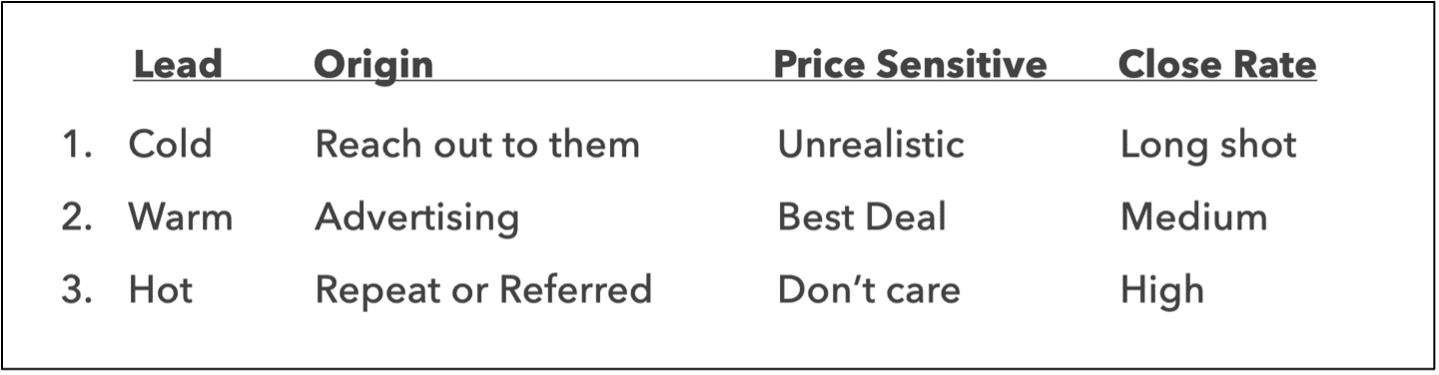
There are three types of sales leads: Cold, Warm, & Hot. Cold = you are calling the potential customer. Warm = the potential customer is calling you because they came across marketing/advertising. Hot = the customer is reaching out to you because they have worked with you before, or through word-of-mouth referrals. Which of the three sales leads do you want?

This is the time of year for planning the 2026 budget. When it comes to a company’s budget, every department annually fights for an increase in its own budget. That’s not surprising; the outcome will determine what the department is allowed to spend for the following year. This is especially true of the budgets for advertising versus customer service training. The only way to win the battle is to prove which expenditures will yield a better return on investment (ROI) for the company. The fact that this is still a debate is a sign of old paradigm thinking by too many senior executives. A shortsighted obsession with constantly bringing in new customers to your business is significantly more expensive than building an incredible customer experience.
How does your company compare to that percentage?
The annual global advertising spend is approximately US $1.10 trillion, according to DataReportal, compared to $10-12 billion spent on customer service training.
Start asking yourself if you are constantly offering incentives to “New Customers Only.” What about rewarding the customers who have been loyal to your business for years—those who do business with you regularly, no questions asked, and refer others to your firm? You ignore them at your peril.
It is a fact that:
- Repeat customers spend more than new customers.
- Repeat customers give higher satisfaction scores.
- Repeat customers tend to give referrals more frequently than new customers.
- You need five new customers to produce as much as one repeat customer.
In a study titled The ROI from Marketing to Existing Online Customers, published by Adobe, it was reported:
- A 5% increase in customer satisfaction can increase a company’s profitability by 75%.
- 80% of your company’s future revenue will come from just 20% of your existing customer base.
Companies spend millions creating and advertising their brands, yet the customer’s experience is what truly drives customer perception, retention, and referrals. If you take really good care of your existing clients, they will generate more new customers than any advertising campaign ever could. Think about what might happen if you reversed your budgets for advertising and customer service.
Stop thinking of Customer Service as your Defense and Marketing as your Offense. Customer Experience is NOT your Customer Support
In any case, it is no longer acceptable to allow customer experience and marketing to act as separate silos. Both departments need to work together; otherwise, the customer loses, which means ultimately the company loses. How do you merge marketing into the customer experience hierarchy? Start by figuring out who owns the voice of the customer, initiate customer satisfaction surveys, sponsor soft-skill experiential training, and designate a senior executive to hold all departments and locations accountable for Key Performance Indicators (KPIs).
Customer Experience Is the New Branding

Branding has changed. It is no longer about building a perception in your
customer’s mind. In the age of smartphones andsocial media, customer experience is the new branding. Customers are defining the brand to the business and everyone else, and we can find out what a large percentage of them think about any brand within minutes by simply searching Google.
Brands put billions into boosting awareness, satisfaction, and loyalty, but they often overlook the most powerful driver of customer value—emotional connection. Research shows that consumers who are emotionally connected with a brand are anywhere from 25 to 100 percent more valuable in terms of revenue and profitability than those who are “merely” highly satisfied with it.
Marketing Will Report to Customer Experience 
Marketing is no longer in control of the brand, and revolutionary companies are acknowledging that by beginning to place the marketing department under customer experience. The major factors driving CX to champion marketing include an increasing need to manage the customer experience throughout the entire customer journey, the need to retain customers, and the need for competitive differentiation. Similarly, Forrester Consulting’s white paper titled “The Business Impact of Investing in Experience” shows through research how businesses are being forced to make bigger investments in their customer experience. “Customer experience has quickly moved from competitive differentiator to business imperative. In a world where the answer to almost any question is at our fingertips, where AI is becoming a part of everyday life, and where we can get a week’s worth of groceries delivered to our homes in less than an hour, consumers and business buyers have come to expect highly contextual and personalized experiences,” noted the authors of the paper.
Traditional “branding” is an old paradigm. Companies that are tired of spending an exorbitant amount of money on advertising and marketing are now reallocating those dollars toward customer experience training. The top customer service companies typically spend the least on advertising and marketing in their industries. They’re proving that the new budget priorities are the direction of the future.
👉 Stop overspending on ads that don’t convert. Discover the ROI of Customer Experience and learn how investing in CX drives loyalty, referrals, and profit growth.
Book a complimentary advisory call with a DiJulius Group expert today. You’ll learn how to empower your team, consistently create exceptional experiences, and, ultimately, build a culture that keeps top talent and loyal customers coming back.